Evaluating the Super Thick Display Font for Your Design Projects
Understanding the Character of Super Thick
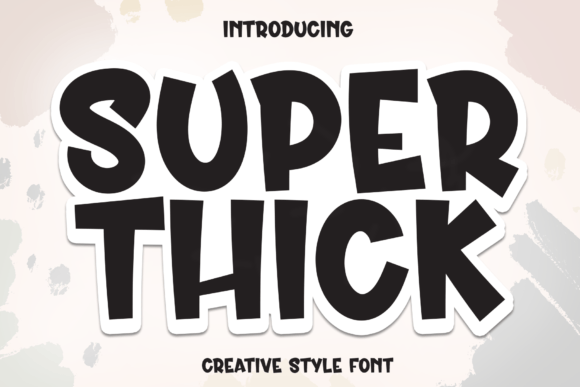
Super Thick is a digital display typeface defined by its extreme visual weight and oversized letterforms. Categorized as a "fat" or "ultra-bold" font, its primary characteristic is the significant thickness of its strokes, which often leaves minimal counter space within characters like 'e' or 'a'. This design creates a dense, impactful block of text that commands immediate attention. The aesthetic is intentionally playful and energetic, moving away from formal elegance toward a more casual, exuberant, and often cartoon-like feel. It is not designed for body text or nuanced typographic hierarchy but for singular, bold statements.
The font's personality is largely shaped by its rounded, soft edges and slightly irregular baseline, which contribute to its friendly and approachable vibe. This makes it distinct from other heavy typefaces that might feel industrial, stark, or intimidating. The visual "burst" of energy it provides is a direct result of this combination of sheer mass and cheerful form.
Core Reasons for Considering This Typeface
Designers and creators are drawn to Super Thick for specific, high-impact scenarios. The decision to use it is typically driven by a need to break through visual noise and convey a particular tone instantly. Key motivations include:
- Maximizing Visual Impact: In environments saturated with content, such as social media feeds or crowded event posters, a headline set in Super Thick can stop scrolling or a passerby's gaze due to its sheer size and boldness.
- Establishing a Playful Brand Tone: For brands targeting children, families, or those in the entertainment, food, or casual lifestyle sectors, the font's lively character can instantly communicate fun, creativity, and approachability.
- Creating Thematic Consistency: It excels in designs for parties, festivals, video game interfaces, toy packaging, or seasonal promotions where the subject matter itself is celebratory and informal.
- Simplifying Hierarchy: Because it is so dominant, a single use of Super Thick for a main title can clearly establish the primary focal point, allowing simpler, contrasting fonts to handle secondary information.
Benefits and Practical Tradeoffs
Like any specialized tool, using Super Thick involves weighing its strengths against its limitations. A balanced evaluation is crucial for effective application.
Primary Benefits
- Unmissable Presence: Its foremost advantage is the ability to fill space and grab focus. This is invaluable for key messages that must not be overlooked.
- Instant Tone Setting: It communicates a specific mood—fun, bold, energetic—without requiring additional explanatory text or imagery.
- Design Simplification: A strong typographic statement can reduce the need for complex illustrations or layouts to create visual interest.
Key Considerations and Tradeoffs
- Severe Readability Limits: At small sizes, its thick strokes can merge, making letters indistinguishable. It is generally unsuitable for text below 24-36 points.
- Contextual Inappropriateness: Using it for serious, corporate, luxury, or minimalist branding can create a jarring mismatch, undermining credibility.
- Overuse Risks: Applying it to multiple text elements (e.g., headline and subhead) can make a design feel cluttered, childish, and visually overwhelming.
- Pairing Challenges: It demands a very contrasting companion font—often a light, simple sans-serif or a clean serif—to avoid visual competition and maintain legibility in supporting text.
Scenarios Where Super Thick Excels
This font becomes a strong asset in clearly defined situations where its characteristics align perfectly with project goals.
Event Marketing and Posters: For music festivals, community fairs, or product launch parties, Super Thick headlines can convey excitement and energy, matching the event's atmosphere. The limited text on a poster also mitigates its readability constraints.
Children's Media and Packaging: Book covers, app interfaces for kids, cereal boxes, and toy labels benefit from its friendly, rounded, and playful aesthetic, which appeals directly to a young audience.
Social Media Graphics and Thumbnails: Platforms like Instagram or YouTube, where first impressions are made in milliseconds, are ideal. A bold title in Super Thick can increase click-through rates by clearly stating the video or post's topic in an engaging way.
Branding for Casual or Edgy Products: Start-ups in the snack food, streetwear, or indie game space can use it to establish a bold, youthful, and confident identity from the outset.
Situations Warranting Alternatives
Recognizing when not to use Super Thick is as important as knowing its strengths. Consider other typefaces when:
- Professional or Corporate Contexts: For business reports, legal documents, financial services websites, or luxury brand identities, a typeface with more restraint, structure, and neutrality is essential to convey trust and professionalism.
- Extended Reading is Required: Any project involving body copy, articles, books, or detailed instructions must prioritize readability over stylistic flair, necessitating a well-designed text font.
- Subtlety and Elegance are the Goal: Wedding invitations, high-end restaurant menus, or boutique hotel branding typically call for typefaces with more refined details, contrast, and historical nuance.
- Space is Limited: In dense interfaces like dashboards, mobile app menus, or detailed infographics, the bulky letters of Super Thick would consume too much valuable screen real estate.
Making a Practical Decision
To determine if Super Thick is the right choice, conduct a simple self-assessment of your project's core needs.
- Define the Primary Message: Is the goal to be loud, fun, and informal? If the answer is yes, it remains a candidate. If the goal is to be trustworthy, sophisticated, or informative, move on.
- Analyze the Context: Where will the design be seen? A large-format poster or a social media ad is a fitting environment. A mobile app's settings screen or a whitepaper is not.
- Plan the Hierarchy: Will you use it for one dominant element only? A disciplined, singular use is most effective. If you feel the need to use it for multiple text layers, reconsider.
- Test with Your Content: Always set your actual headline text in the font at the intended size. Does it remain legible? Does the tone match your brand voice? Does it complement your chosen imagery?
Ultimately, Super Thick is a specialized instrument in a designer's toolkit. Its value is not universal but highly contextual. When used with intention and restraint, in the right setting and for the right audience, it can powerfully achieve its goal of creating a fun, bold, and unforgettable visual statement. When the project's requirements shift toward clarity, subtlety, or professionalism, exploring other typographic paths is the prudent course of action.